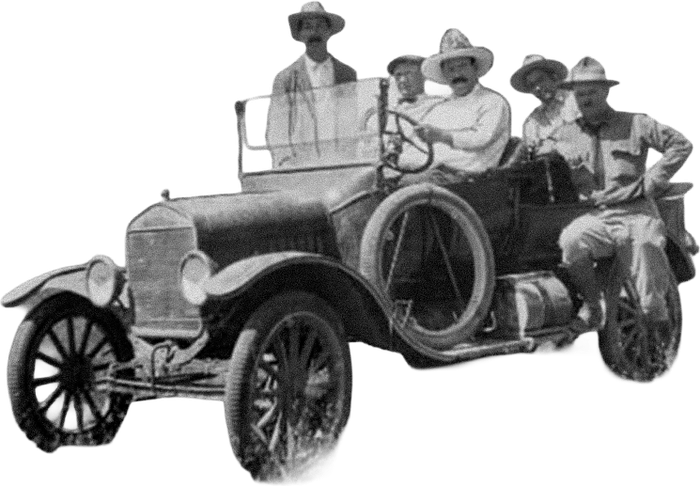
July 20, 1923 · Parral, Chihuahua, Mexico
Pancho Villa Assassination: The Parral Ambush
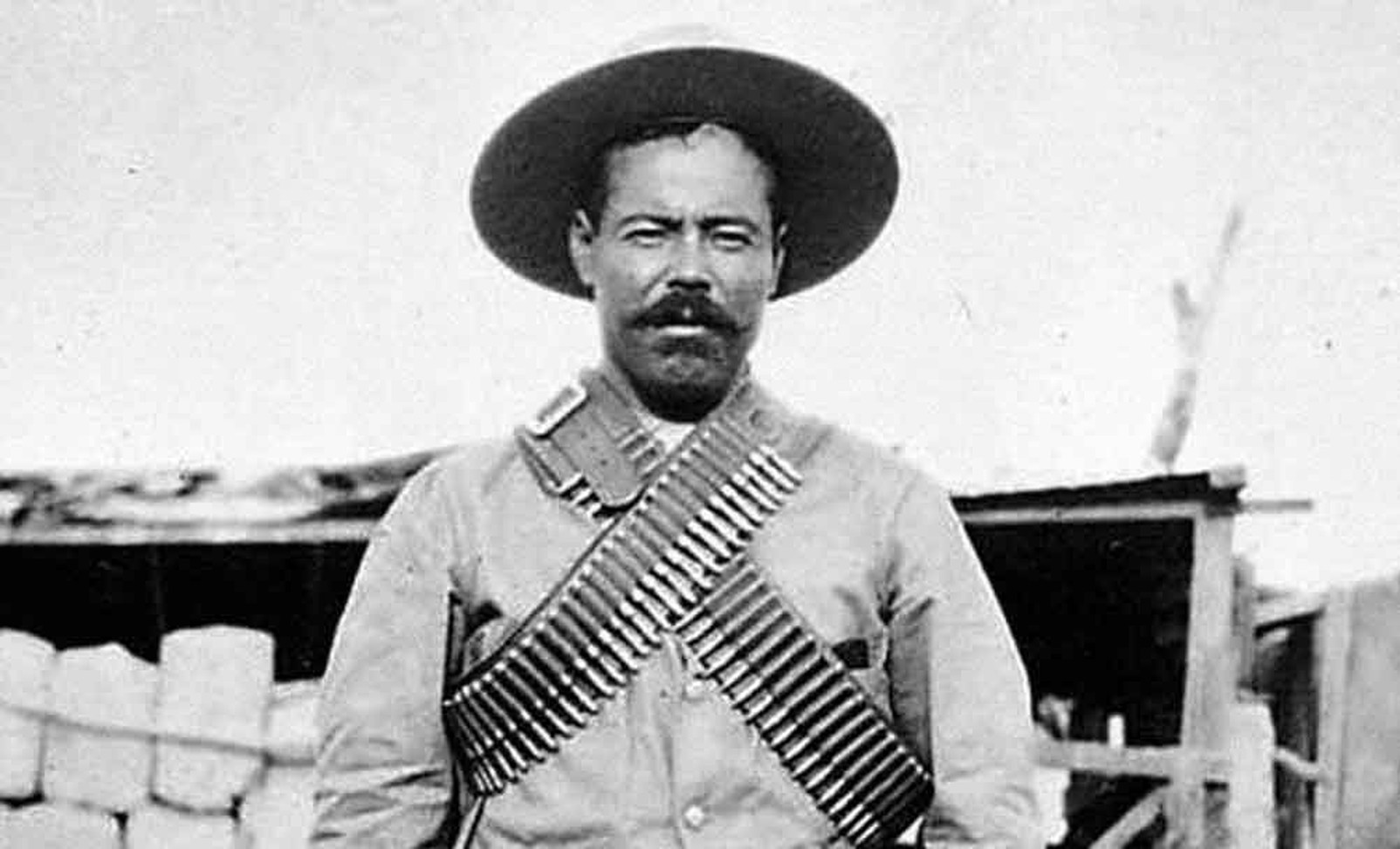
In July 1923 Pancho Villa was shot dead in an ambush in Parral, Chihuahua. A man confessed, was sentenced to twenty years, and walked free soon after. Who really sponsored it is still disputed. This is what Eli and Simone argued over.
SIMONEWhy cross the border and pick that fight at all, though?
ELIThe US had just recognized Carranza's government as legitimate, cutting Villa off from the arms and support he'd been counting on. Depending who you ask, Columbus was retaliation.
SIMONESo even the raid that made him a legend was personal.
ELIMaybe everything about this man was.
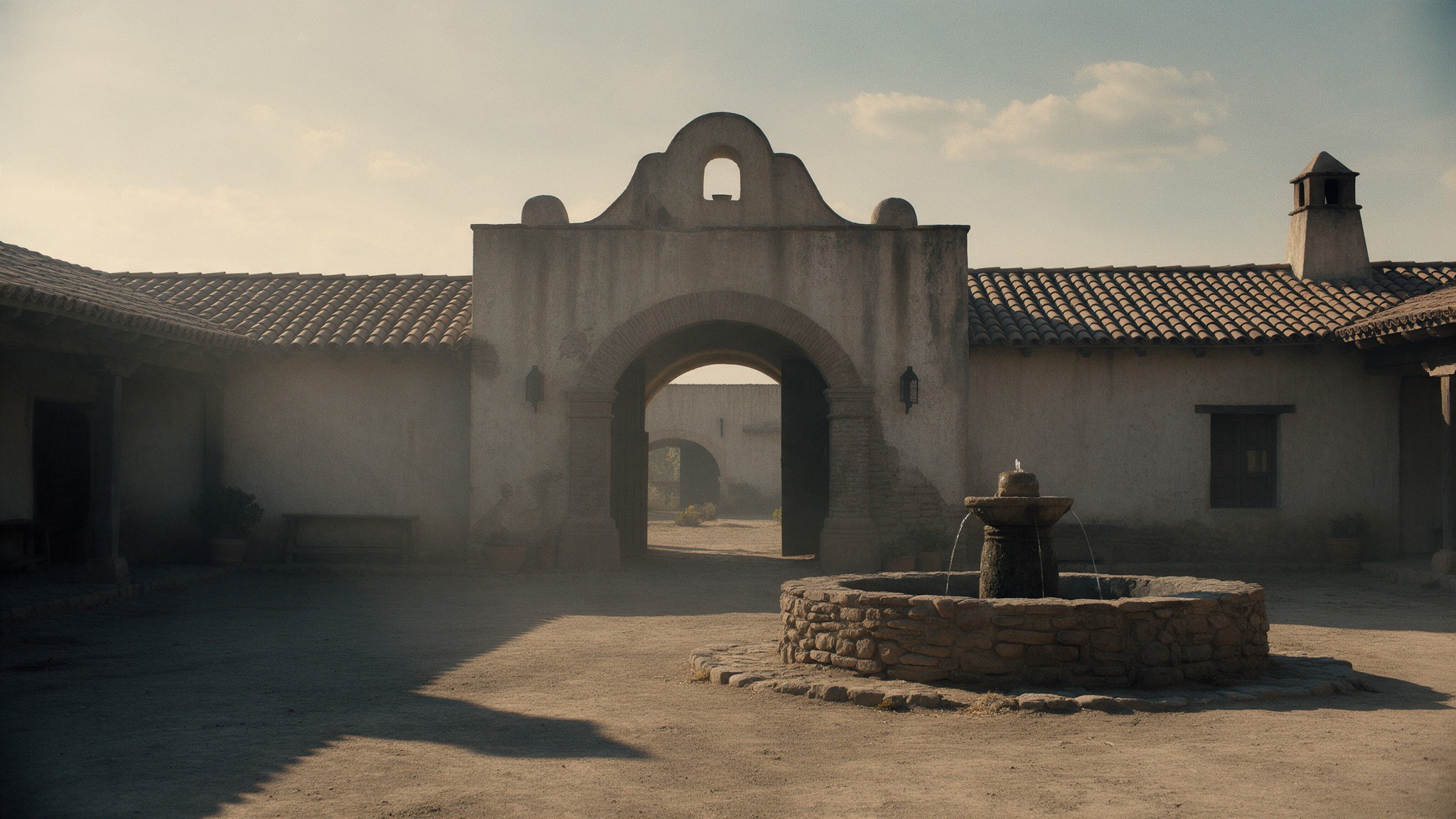
Canutillo
Interim president Adolfo de la Huerta negotiated Villa’s amnesty, not Obregón. Villa took it and settled into farming.
- The landA 25,000-acre hacienda at Canutillo, Durango
- The dealA government pension
- The guard50 of his own former fighters, government-sanctioned
- What he builtA school and houses for the local community
ELIObregón takes power. But here's a detail worth getting exactly right, because it matters for what comes later. Obregón isn't the one who makes peace with Villa. That's Adolfo de la Huerta, Obregón's ally, serving as interim president in the gap before Obregón's own term officially begins.
SIMONEDe la Huerta's the one who offers the deal: 25,000 acres at a hacienda called Canutillo in Durango, a pension, and Villa gets to keep 50 of his own Dorados as a personal guard. Written Into the agreement. Government-sanctioned.
- 01 / 04 · THE CONFESSION
Jesús Salas Barraza, a Chihuahua state legislator, publicly confessed. He cited a grudge: Villa had once pistol-whipped him in a dispute over a woman.
- 02 / 04 · THE SENTENCE
Twenty years, commuted by the governor of Chihuahua. Sources converge on a release after roughly one to three months.
- 03 / 04 · THE SUSPECTS
Gen. Joaquín Amaro, who had fought Villista guerrillas, and Melitón Lozoya, the hacienda’s former owner, in a debt dispute with Villa.
- 04 / 04 · THE GAP
Nobody can produce a signed order. Historians read the same facts as cover from above or as personal grudges.
SIMONEVilla isn't a name I met in a research packet. He's a name I've heard my whole life, at family tables, from my grandfather. The same story told four different ways depending on who's telling it that year. Bandit. Revolutionary. Robin Hood. Warlord. Sometimes all four in the same sentence.
ELIThat's not nothing.
SIMONEIt's not evidence either, and I'm not going to pretend it is. But it's a different way of knowing a story than reading 800 pages of primary source history. And I think both are legitimate ways into this case.
Two readings of a killing
Same caseCover from above.
A public confession followed by quiet mercy is the pattern of a man who did a job somebody wanted done. Obregón’s circle benefited and protected the confessed gunman afterward. No signed order exists, but the chain from benefit to cover does.
Three grudges, one morning.
Institutions don’t need to order what several people already wanted badly enough to plan themselves. Salas Barraza, Amaro and Lozoya each had a documented reason. The cover came after because it was convenient, not before because it was ordered.
No source settles who sponsored the ambush.
ELIAgreed. So let's build the two cases. Mine starts with the confession, because unusually for this kind of assassination, somebody actually stands up and takes credit. Jesús Salas Barraza, a local politician, minor figure, publicly announces he planned the whole thing. Confesses openly. No trial theatrics. No denial.
SIMONEWhich already should feel strange to you. Men who plan political assassinations do not usually hold Press conferences about it.
ELIIt gets stranger. He's convicted. 20-year sentence.
ELIFor what it's worth, I think that's a real gap in what I've got. I can build you an institutional chain that ends in they benefited and they covered. I can't hand you a signed order. Nobody can. That document doesn't exist. And by every account, it never did.
SIMONEAnd I can't hand you Salas Barraza's private motive on a silver platter either. He never explained himself past the confession. We're both working right up to the edge of what the record actually gives us.
From an army to an empty road
1914 to 1926- The Mutual Film Company signs a contract for exclusive rights to film Villa’s troops in battle, with Villa getting 20% of the revenue.
- Villa’s forces raid Columbus, New Mexico. Gen. John J. Pershing’s Punitive Expedition of about 10,000 troops pursues him until February 1917 and never captures him.
- Álvaro Obregón, who beat Villa at Celaya in 1915, leads a revolt. Carranza flees Mexico City and is killed in May.
- Interim president Adolfo de la Huerta gives Villa the Canutillo hacienda, a pension and a guard of 50 of his own former fighters.
- In Parral, a street vendor’s shout of “Viva Villa” signals gunmen. Villa is struck an estimated nine times and dies at or near instantly. Four of the five men with him are killed.
- Jesús Salas Barraza publicly confesses and is sentenced to twenty years, but the governor commutes it and he serves only a fraction.
- De la Huerta, who had given Villa his amnesty, rebels openly against the Obregón and Calles government.
- Villa’s grave is broken into and his skull removed. An American, Emil Holmdahl, is implicated at the time. The skull is never recovered.
Two readings
No winner“I can’t hand you a signed order. Nobody can.”
- “Public punishment, private mercy.”
- “I can build you an institutional chain that ends in they benefited and they covered.”
- “Multiple plausible sponsors. No closed verdict.”
“Institutions don’t need to order what 3 people already wanted badly enough to plan themselves.”
- “You’re reading a gap as a signature.”
- “It’s not evidence either, and I’m not going to pretend it is.”
- “That contradiction isn’t a flaw in the story. For a lot of people, it is the story.”
In their own words, from Episode 06.
No verdict.
ELIThe historical record doesn't resolve that. It just keeps handing you more evidence for whichever side you already believed.
SIMONEMaybe that's fitting. Because the version I grew up with was never trying to resolve it either. My grandfather would tell it one way when he wanted Villa to be the hero, and a different way when he wanted to make a point about violent men and the myths we build around them. Sometimes in the same telling, 10 minutes apart. That contradiction isn't a flaw in the story. For a lot of people, it is the story.
- Did anyone above Salas Barraza order the killing, or did several grudges meet on one morning?
- Why did Villa leave town with so few guards the day he died?
- Where is his skull, and who took it?
Hear the whole debate
A new case every Sunday
One short email when each new case file opens. Unsubscribe any time.