September 28 – October 1, 1982 · Chicago area, Illinois
The Chicago Tylenol Murders
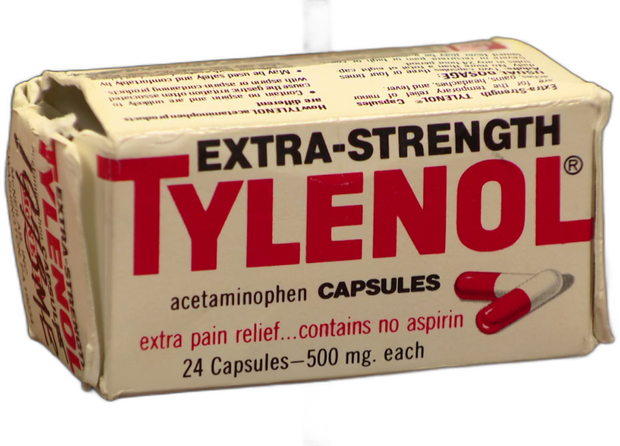
Seven people died in four days in 1982 after taking Extra-Strength Tylenol that someone had laced with cyanide and put back on store shelves. The recall and the tamper-proof bottle came within weeks. The killer was never charged. The hosts split on what the man most associated with the case really tells us.
ELIIt's a public health nurse, Helen Jensen, making a routine follow-up visit to the grieving Janus family. The kind of check-in that happens 1,000 times a year and means nothing, right up until it doesn't. She's standing in that kitchen, and she counts it out in her head. Six capsules missing from the bottle on the counter, three people already dead in that house.
The shelf
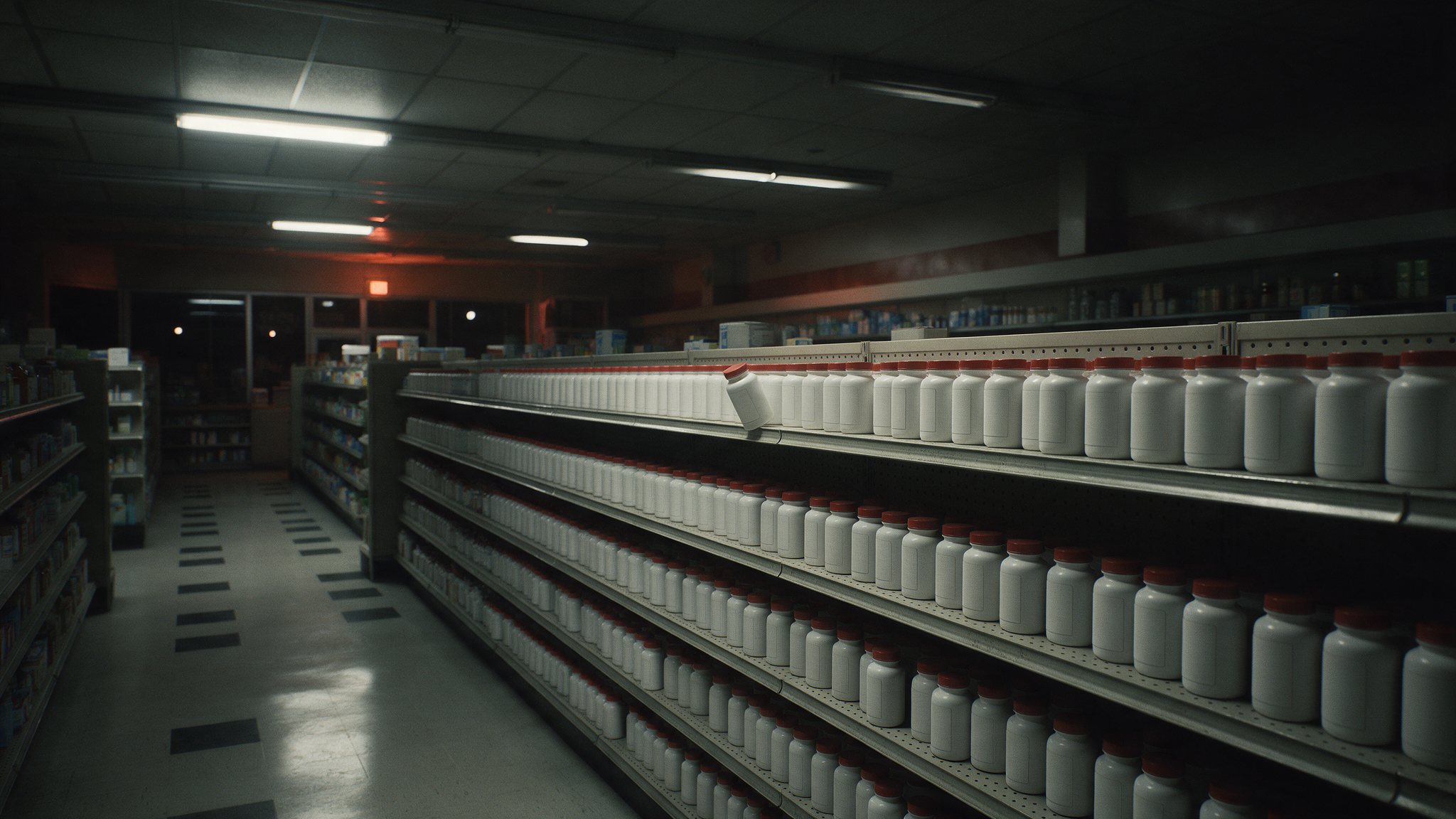
The poison did not come from the factory. Someone bought bottles off store shelves, opened them, laced the capsules with potassium cyanide and returned them to shelves at several Chicago-area retailers. Seven people bought something ordinary and none of them knew.
- The productExtra-Strength Tylenol capsules laced with potassium cyanide
- The storesJewel, Osco, Walgreens, Dominick’s and Frank’s Finer Foods
- The bottle that broke it openFour of the 44 capsules left in the Janus family’s bottle carried nearly triple a fatal dose
- The recallAbout 31 million bottles recalled nationwide on October 5, 1982
ELIAnd what I found is that the tidy version— recall, redesign, lesson learned— quietly steps around the fact that nobody was ever convicted of the actual murders. The packaging problem got solved. The crime didn't.
SIMONEThat's fair. I think most people who know this case at all know it as the one that led to tamper-proof bottles. Most of them would probably be surprised to hear it's still an open homicide investigation.
ELIOfficially open today, 44 years later.
- 01 / 04 · SEPT. 28 – OCT. 1, 1982, THE POISONINGS
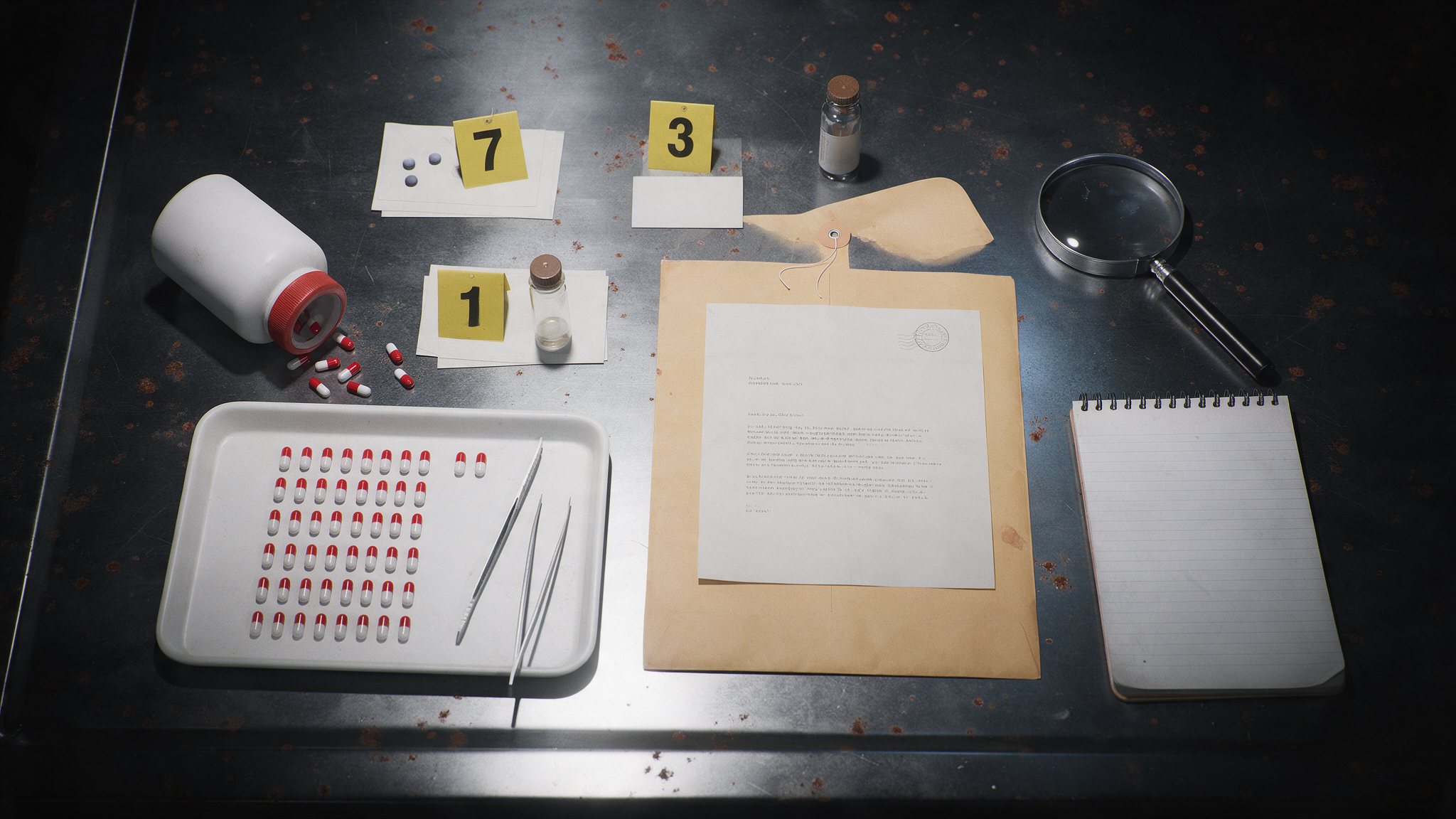
Seven people died in the Chicago area after taking capsules from tampered bottles. A public health nurse noticed six capsules missing from one family’s bottle, and a medical examiner’s investigator caught an almond-like odor.
- 02 / 04 · OCT. 1, 1982, THE LETTER
A letter signed “Robert Richardson” demanded $1 million to “stop the killing.” It held technical detail about the tampering that had not been made public. It was later tied to James W. Lewis.
- 03 / 04 · 1982–1984, THE CHARGES
Lewis was arrested December 13, 1982. In June 1984 he was convicted of extortion under the Hobbs Act and sentenced to 10 years. He was never charged with the murders.
- 04 / 04 · 2009–2023, AFTER
Documents unsealed in 2009 show federal investigators privately concluded Lewis was responsible but lacked evidence to charge him. Lewis and Roger Arnold both tested negative for a DNA match in 2010. Lewis died July 9, 2023.
SIMONEWhich brings us to the letter. October 1st, postmarked the same week as the murders, a letter arrives at Johnson & Johnson's offices demanding $1 million to, quote, stop the killing. Signed, Robert Richardson.
Close enough to cash in, or not enough to charge
Same caseBelief was never the same as proof.
No fingerprints, no DNA, and nothing places Lewis in Chicago that week or puts his hands on a bottle. The federal conclusion is a well-informed read, but it is still not evidence. His story about the letter moved over forty years, yet it never became a confession.
He knew something the public didn’t.
A ransom letter with operational detail days after the poisonings is not a coincidence she can explain away. Add a federal conclusion that sat unactioned for decades and the pattern of aliases, and she will not concede he is innocent. Degraded evidence, she argues, is not the same as no evidence.
Whether Lewis was the killer is still unresolved. Accounts differ on whether Theresa Janus died on September 29 or 30. Roger Arnold, an early person of interest, was never charged in the Tylenol case. The powder found in his home tested as potassium carbonate, not cyanide, and most sources treat him as a discredited lead. The FBI’s 2011 request for Ted Kaczynski’s DNA rested only on a suburb and is treated as a thin, largely dismissed thread. The episode does not make the allegations about Johnson & Johnson that the research flagged as single-source. A developing lead surfaced in September 2026: Idaho authorities identified a chemist who died of cyanide poisoning in a Boise church in December 1982 and said he may be connected. The two lead news accounts disagree on several specifics, and no agency calls him a suspect. The clips leave it out because it is still moving.
ELIBut watch what it actually gets him convicted of in 1984. Extortion. The Hobbs Act. 10 years. Not murder. He was never charged with a single one of the seven deaths.
SIMONEBecause they couldn't build a murder case. Not because there wasn't one to build.
ELINever charged. In fact, the year after this, he shoots and kills a completely unrelated man, mistook him for the bartender who reported him, and goes to prison for that murder instead. He dies in 2008, still never tied to the poisonings. His remains got exhumed in 2010 for DNA testing, same as Lewis's sample that year.
SIMONEAnd?
ELINeither one matches anything recovered from the bottles.
SIMONESo the two names most associated with this case for four decades, neither one has a shred of physical evidence connecting them to it.
From the shelf to the letter
1982 to 2023- The first deaths. Capsules from tampered Extra-Strength Tylenol bottles reach shelves around Chicago.
- Seven people are dead. A letter demanding $1 million to “stop the killing” reaches Johnson & Johnson.
- Nationwide recall of about 31 million bottles.
- Tylenol returns in triple-sealed, tamper-resistant packaging.
- James W. Lewis is arrested.
- Lewis is convicted of extortion, not murder, and sentenced to 10 years.
- Documents show federal investigators privately concluded Lewis was responsible.
- Lewis dies at home in Cambridge, Massachusetts, still denying any involvement.
Two readings
No winner“It is still not evidence.”
- “The packaging problem got solved. The crime didn’t.”
- “No fingerprints connect him to those bottles. No DNA.”
- “It’s their read. It’s a well-informed read.”
“Dying isn’t the same as being cleared.”
- “That’s not a coincidence I can explain away.”
- “Degraded evidence isn’t the same thing as no evidence.”
- “Nobody has ever had enough to say his name and mean it.”
In their own words, from Episode 15.
No verdict.
ELICourt documents get unsealed, and they show federal investigators privately concluded, internally, that Lewis was responsible. Not filed charges. A belief, on the record, that they couldn't make stick.
SIMONEThat's not nothing, Eli. That's investigators who spent decades inside this file, closer to it than either of us will ever be, looking at everything and landing on him.
ELIIt's their read. It's a well-informed read. It is still not evidence.
- Can a federal conclusion that was never charged count for anything in a case with no physical evidence?
- Does a letter that shows knowledge of the method point to the killer, or only to someone who was close to the story?
- Is a case still open if the one man everyone suspects is gone and the DNA has already come back empty?
Hear the whole debate
A new case every Sunday
One short email when each new case file opens. Unsubscribe any time.