November 19–28, 1953 · Deep Creek Lake, Maryland and New York City
The Mysterious Death of Frank Olson: CIA, LSD, and a Hotel Window
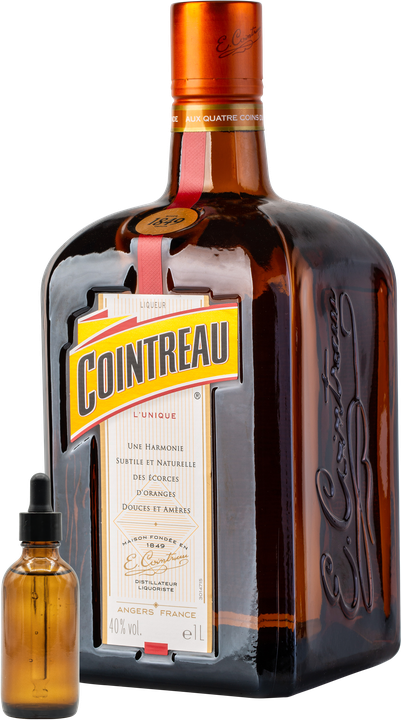
In November 1953 the CIA secretly dosed a bottle of Cointreau with LSD at a retreat in western Maryland. Nine days later, Army bacteriologist Frank Olson went through the window of Room 1018A at the Hotel Statler in New York, sharing the room with CIA chemist Robert Lashbrook. His family was not told about the drug for 22 years. The hosts split on whether the paper record shows a drugged man coming apart or an account written by the people who drugged him.
SIMONEA bottle of Cointreau. November 1953, an old lodge in the Maryland woods. Someone from the CIA has spiked it with LSD, and most of the scientists around the table drink. Nobody warns them.
ELINine days later, one of those scientists goes through a hotel window in New York.
SIMONEAnd the only other man in that hotel room, Eli, was from the CIA team that spiked the bottle.
ELIThe man on the sidewalk was Frank Olson. The man in the room was Robert Lashbrook. November 28th, 1953. The Hotel Statler, room 1018A.
SIMONEHis family was told he jumped or fell. Nobody told them about the LSD for 22 years.
ELIAnd 41 years later, his son had him dug up.
Room 1018A
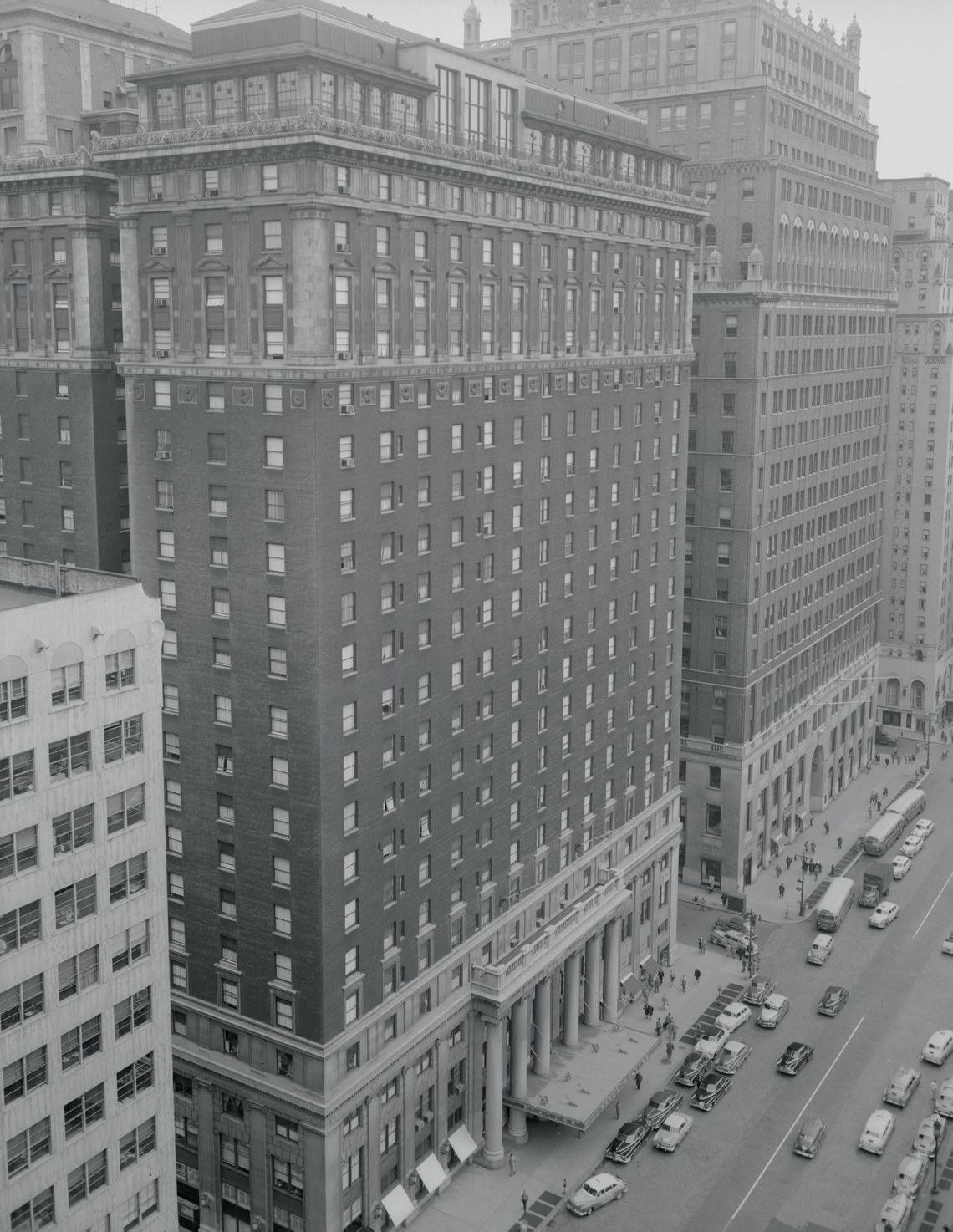
Olson died on November 28, 1953, after going through the window of Room 1018A at the Hotel Statler in New York. He shared the room with Robert Lashbrook, a CIA chemist and Gottlieb’s deputy. Lashbrook told police he woke to a noise and found the window broken, and did not tell them about the LSD. The hotel later became the Hotel Pennsylvania and was demolished in 2022–2023.
- The manFrank Olson, a bacteriologist and branch chief in the Special Operations Division at Camp Detrick
- The roomRoom 1018A, shared with CIA chemist Robert Lashbrook
- The dosingNine days earlier, Gottlieb’s group spiked a bottle of Cointreau with LSD at a retreat at Deep Creek Lake, Maryland
- The programThe CIA’s drug and behavior-control research, later known as MKUltra
ELIThat's our reading. But the principle is on paper. A Justice Department summary from 1975 repeating the Presidential Commission's report says Olson himself had taken part in discussions where testing on unsuspecting subjects was agreed to in principle.
SIMONEAnd the family's lawyers told the CIA that nothing in the files they'd been given put Olson in those discussions. If that's all the commission had, they wrote, it made that line up. And Ruwet, who drank from the same bottle, told them he never agreed to anything.
ELISo even the paper argues with itself.
- 01 / 04 · THE WEEK, BY RUWET
In his written statement of December 1, 1953, Olson’s boss and friend Lt. Col. Vincent Ruwet recorded Olson’s decline day by day: agitated the morning after, asking whether he should be fired or quit, feeling “all mixed up,” taken to New York for help, found in the hotel lobby before dawn on Thanksgiving saying he had thrown away his wallet and ID, and asking on the drive home to be turned over to the police. Ruwet also records that Olson had asked to be home for Thanksgiving dinner, and that on the phone on Friday night, November 27, he sounded relaxed. In New York Olson was taken to Dr. Harold Abramson, an allergist and immunologist rather than a psychiatrist, who held CIA contracts for LSD research.
- 02 / 04 · NOVEMBER 28, ROOM 1018A
Olson died on November 28, 1953, after going through the window of Room 1018A at the Hotel Statler, which he shared with CIA chemist Robert Lashbrook, Gottlieb’s deputy. Lashbrook told police he woke to a noise and found the window broken. He did not tell them about the LSD. The record disagrees on the floor (tenth or thirteenth) and on the time of the fall: about 2:30 a.m. in a 1975 Justice Department summary, 2:45 in Lashbrook’s later account, before 2 according to a hotel employee. Ruwet records that Gottlieb telephoned him with the news at about 2:45.
- 03 / 04 · 1994 TO 2001, THE RE-EXAMINATION
In 1994 Olson’s son Eric had his father’s body exhumed. Forensic scientist James Starrs led a re-examination and concluded that a blow to the head came before the fall, calling the findings “rankly and starkly suggestive of homicide.” The Manhattan District Attorney reopened the case in 1996, questioned Lashbrook in 1998 under a court order, and closed the inquiry in 2001 with no charges. Prosecutor Steve Saracco told the Baltimore Sun, “We could never prove it was murder.”
- 04 / 04 · 1975 TO 2013, THE PAPER
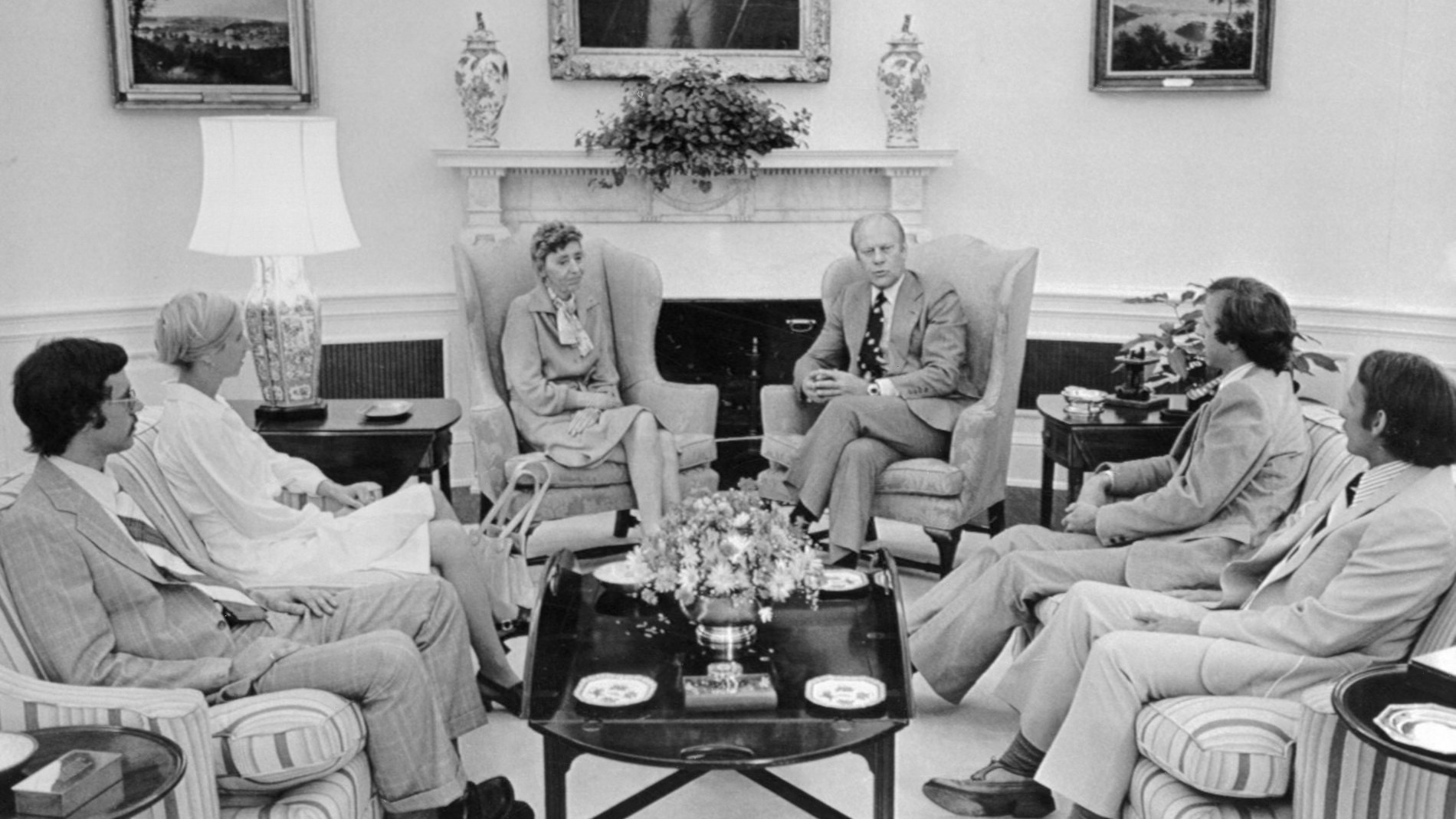
The family was not told about the LSD until 1975, when the Rockefeller Commission reported that the CIA had given LSD to people who did not know it and that one person died in 1953, “apparently as a result.” A July 11, 1975 White House memo shows Ford’s aides recommending an expression of regret and warning that a lawsuit or hearing might require disclosing “highly classified national security information.” Ford apologized to the family on July 21, and in 1976 Congress paid them $750,000 in full settlement. In 2013 Judge James Boasberg dismissed the sons’ suit on three grounds, writing that “the public record supports many of the allegations that follow, farfetched as they may sound.”
ELIAnd here's my anchor. The Manhattan District Attorney reopened this in 1996. Cold case prosecutors. They closed it in 2001. No charges. One of them, Steve Saracco, told the Baltimore Sun, we could never prove it was murder.
SIMONECould never prove it.
ELIThat's what he said.
Jumped or pushed
Same caseA drugged man came apart, and nobody has ever put a second man in the room.
Eli reads the record as a breakdown. A man dosed without warning spent days telling the people around him he was coming apart, no witness or evidence places a third person in the room, Lashbrook’s account stayed the same from 1975 to 1998, and the Manhattan DA’s office closed its inquiry without charges. He concedes the head wound is not cleanly explained by a breakdown story, and that the record cannot agree on the floor or the time, which he calls the ordinary sloppiness of 1953 records.
The paper is theirs, and the paper doesn’t agree with itself.
Simone distrusts the record because most of it was written by the institution that drugged him. She points to Starrs’s 1994 finding of a head wound before the fall, the disagreement over the floor and the time of the fall, and the agency’s 22 years of silence. She concedes she cannot say who would have pushed him or why, and that a prosecutor’s “we could never prove it” is not a finding that it wasn’t murder.
Whether Frank Olson jumped or was pushed has never been established. No one was charged. Sources disagree on who physically spiked the Cointreau (John Marks’s 1979 history says Gottlieb; the family’s 2012 lawsuit alleged Lashbrook), on the floor, and on the time of the fall. The case for homicide rests on Starrs’s 1994 finding, the reported absence of glass cuts and doubts about the CIA’s own record. The case against rests on the 2001 close of the DA inquiry, Olson’s documented paranoia after the dosing, Lashbrook’s consistent account and the absence of any evidence of a third person in the room. Several details the hosts discuss rest on a single account and are marked that way on the source list.
SIMONEFine, then here's evidence. 1994. Olson's son Eric has his father's body exhumed. A forensic scientist named James Starrs leads a reexamination, and Starrs finds a blow to the head, a wound he concluded came before the fall, not from it. His words for it? Rankly and starkly suggestive of homicide. Suggestive. I knew you'd grab that word.
ELIIt's the most important word in the sentence.
ELIAnd the record makes it worse. It can't agree on the window. Room 1018A sounds like the 10th floor. And plenty of accounts say 10th. Others, including the medical examiner's report as it's been quoted, say the 13th.
SIMONEAnd the clock.
ELIThe clock. A Justice Department summary from 1975 says Lashbrook woke to the noise about 2:30. Lashbrook later told investigators 2:45. A man working at the hotel that night put it before 2.
SIMONEAnd then there's Ruwet. He says Gottlieb called him with the news around a quarter to 3. So Lashbrook had already called Gottlieb before that. Whatever happened in that room, it happened earlier than Lashbrook says.
ELIOr around means around. Nobody in 1953 was writing these times down to the minute. That's just what these records look like.
From the Cointreau to the flattened lot
1953 to 2024- At a CIA–Army retreat at Deep Creek Lake, Gottlieb’s group spikes a bottle of Cointreau with LSD. Olson and other Camp Detrick scientists drink it without knowing.
- Ruwet records Olson’s decline day by day. Olson is taken to New York to see Dr. Harold Abramson, an allergist with CIA LSD contracts.
- Olson goes through the window of Room 1018A at the Hotel Statler. Robert Lashbrook is in the room. Lashbrook tells police he woke to a noise and does not mention the LSD.
- The CIA’s LSD is locked in a safe and testing is stopped. Unwitting testing later resumes and continues for about another decade. Ruwet writes his statement.
- The Rockefeller Commission reports that the CIA gave LSD to unwitting people. A White House memo on July 11 urges regret, not disclosure. Ford apologizes to the family on July 21.
- Congress pays the family $750,000 in full settlement of their claims.
- Olson’s body is exhumed in 1994. The Manhattan DA reopens the case in 1996, questions Lashbrook in 1998 and closes it in 2001 with no charges.
- Judge Boasberg dismisses the sons’ lawsuit on July 17, 2013. The Hotel Statler site is flattened by early 2024.
Two readings
No winner“You don't need a murder to explain what happens next. You just need a program this careless.”
- “Suspicion isn't evidence.”
- “A motive isn't a man in the room. And nobody's ever put one there.”
- “Sloppiness looks like a pattern if you're looking for one.”
“That's my whole problem with this case. Not that the paper's wrong. That the paper is theirs.”
- “The one thing every account needed to get right was the moment he died. And it's the one thing they can't agree on.”
- “So the first thing they locked up was the drug. Not the truth.”
- “It's still the same reflex as 1953. Keep it inside the building.”
In their own words, from Episode 19.
No verdict.
ELIAnd on July 11th, there's a White House memo. In it, three of President Ford's senior aides— his counselor Jack Marsh, White House counsel Rod Hills, and Dick Cheney— recommend that Ford limit himself to an expression of regret and an offer to meet the family and apologize on behalf of the government. And they warned that a lawsuit or a hearing in Congress could force the government to reveal highly classified national security information.
SIMONEHighly classified? About what? A man who died 22 years earlier?
ELIIt doesn't say. No programs, no names, nothing.
SIMONETwo and a half years before that memo, in January 1973, the CIA director authorized destroying the MKUltra files.
ELIWhich is why I read the memo the plain way. They were protecting the program. In 1975, it was still secret. What survived the shredding didn't surface until 1977. You'd write exactly that memo whether Frank Olson jumped or was pushed.
- If the people who drugged Frank Olson also wrote most of the record of his last days, how much weight should that record carry?
- How far can a head wound found in a body buried for 41 years be read as evidence of what happened before the fall?
- When a prosecutor says “we could never prove it was murder,” is that a statement about the evidence or about what a court could be shown?
Hear the whole debate
A new case every Sunday
One short email when each new case file opens. Unsubscribe any time.