
September 14–16, 1922 · De Russey’s Lane, New Brunswick, New Jersey
The Hall–Mills Murders
On September 16, 1922, two bodies were found laid out side by side under a crab apple tree in a New Jersey lane. Four years later a family was tried for it and acquitted. After a century the case is not short of evidence. It is short of evidence anyone can trust. The hosts split on what the acquittal means.
SIMONEAnd this isn't a one-afternoon thing.
ELIIt is not. On weekends, this field is reportedly pulling something like 1,000 cars a day. Vendors show up. Popcorn, peanuts, soda, balloons. Like it's a county fair, not a murder scene. Balloons.
SIMONEBalloons.
A witness on a hospital bed
Jane Gibson, a local farmer the press nicknamed “the Pig Woman” because she raised hogs, was the prosecution’s central eyewitness. She testified from a hospital bed wheeled into the Somerville courtroom, describing a woman’s scream of “Don’t!” and a shouted name, “Henry.” Her account had shifted across her earlier statements.
- The witnessJane Gibson, “the Pig Woman,” testifying from a hospital bed
- The trialSomerville, N.J., Nov. 3 – Dec. 3, 1926
- The pressRoughly 300 reporters, including Damon Runyon and H.L. Mencken
- The defendantsFrances Hall, Henry Stevens and Willie Stevens
SIMONEOkay, so who's actually on trial?
ELIFrances Hall, the Reverend's widow, her two brothers, Henry and Willie Stevens, and a cousin, Henry Carpender, who gets his own trial severed off and is never actually tried, charges eventually dropped.
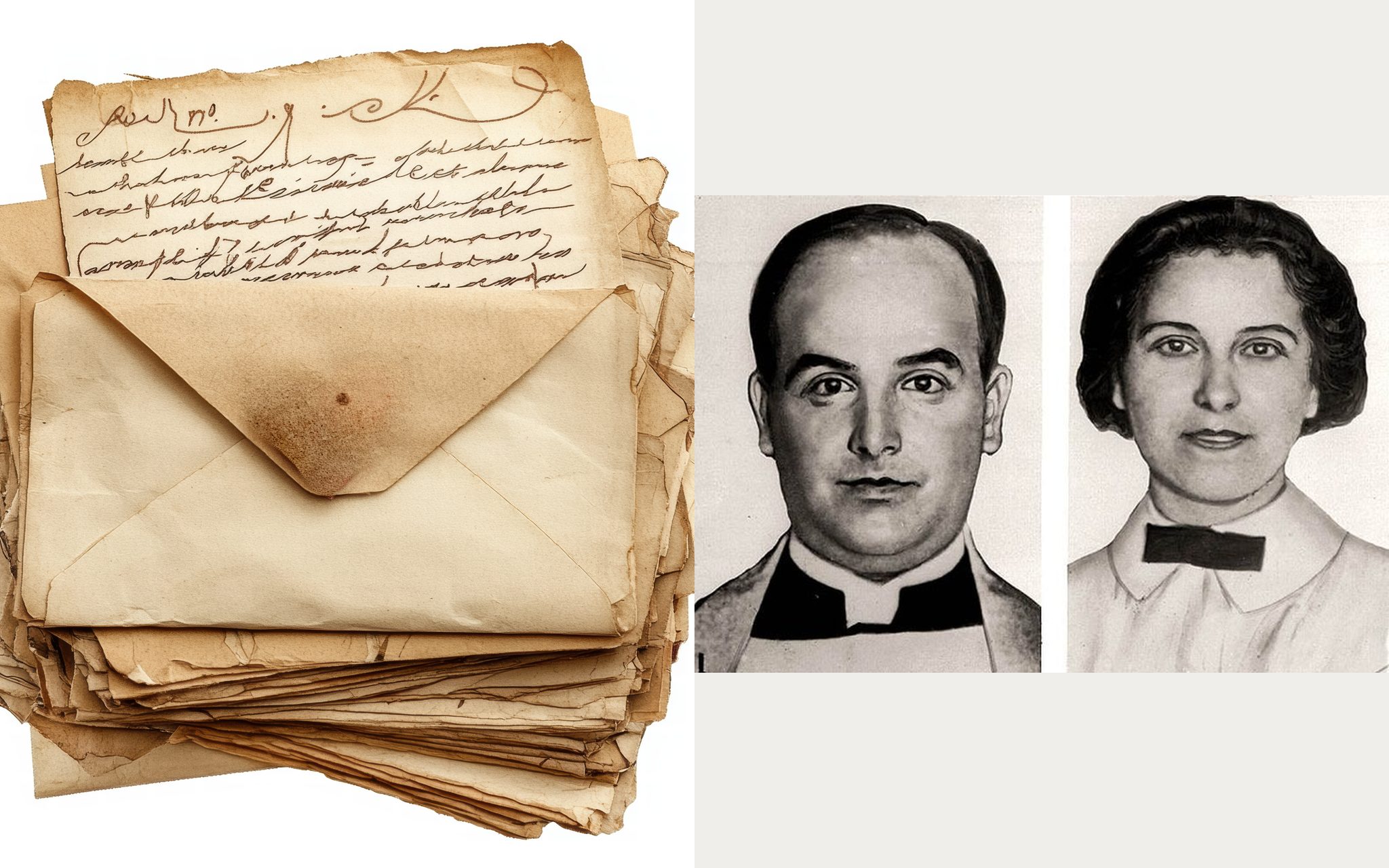
- 01 / 04 · 1922, THE SCENE
Hall, 41, and Mills, 34, were found September 16 under a crab apple tree, laid side by side, with torn love letters scattered around them and Hall’s calling card at his feet.
- 02 / 04 · 1922–23, THE FIRST INVESTIGATION
The scene was never secured. Two counties argued over jurisdiction while crowds took souvenirs. No one was indicted, and evidence and grand jury paperwork later went missing.
- 03 / 04 · 1926, THE TRIAL
Willie Stevens’s fingerprint was on Hall’s calling card, and he owned a .32 pistol with its firing mechanism filed down. Henry Stevens’s alibi had three witnesses.
- 04 / 04 · DECEMBER 3, 1926, AND AFTER
All three were acquitted. The case remains unsolved. Every named principal was dead by 1992, and no DNA testing has been reported.
ELIThis is the part I actually want to sit with because it's a real case, not smoke. Willie Stevens's fingerprint is identified on the calling card found at the scene.
SIMONEA family member's fingerprint. On evidence. At a murder scene.
ELIHe also owns a .32 caliber pistol, matching caliber to the murder weapon, with the firing mechanism filed down.
SIMONEThat detail alone?
Doubt or a family that walked
Same caseReasonable doubt is the honest read.
The scene was compromised within hours, the star witness couldn’t keep her story straight, and a fingerprint proves presence, not murder. Henry’s alibi holds. He thinks the jury got it right, and he calls the case one built on the shape of guilt rather than the fact of it.
The pattern is hard to wave off.
A humiliated wife, brothers with every reason to protect the family name, and a fingerprint on the card: innocent explanation or not, it’s still his hand on it. She argues reasonable doubt did a lot of quiet work for a family with money and standing, and she thinks the family walked out with something they didn’t deserve.
Several details in the episode rest on a single account and are left out of the clips: Ralph Gorsline’s presence in the lane and his admission that he heard shots around 10:15, Gibson’s growing detail over four years, her mule “Jenny,” and the stenographer and word-count figures. The scratches on Frances Hall’s cheek were never corroborated to the standard of the fingerprint or the pistol. Historians split: Gerald Tomlinson (1999) concluded the Stevens siblings were guilty, while William Kunstler concluded the acquittal was probably right.
ELIThe scene's compromised within hours— souvenir hunters, a jurisdictional turf war, evidence nobody secured properly. Add a star witness who can't keep her story straight across three tellings, and what you're left with is a fingerprint that proves presence, not murder, and a case built on the shape of guilt rather than the fact of it. Henry's alibi holds. Reasonable doubt here isn't a technicality; It's the only honest read of what the state actually had.
ELIEvery person in this story, both victims, all four accused, Gibson, the families, they're all gone now. Last one dies in 1992. Nobody ever came back to this with modern forensics. There's no DNA test waiting in the wings to settle it.
SIMONESo it just stays exactly like this. An acquittal nobody fully believed, sitting next to a circumstantial case nobody could quite prove.
From the lane to the courtroom
1922 to 1999- Rev. Hall and Eleanor Mills are last seen alive.
- Their bodies are found in De Russey’s Lane, on the Somerset–Middlesex county line.
- Jurisdictional wrangling and souvenir crowds compromise the evidence.
- Prosecutor Joseph Stricker’s investigation ends with no charges. Evidence and grand jury paperwork go missing.
- Under tabloid pressure, Gov. A. Harry Moore orders the case reopened.
- Frances Hall and brothers Henry and Willie Stevens go on trial in Somerville.
- Jane Gibson testifies from a hospital bed in front of roughly 300 reporters.
- All three defendants are acquitted. The case stays officially unsolved.
Two readings
No winner“Reasonable doubt here isn’t a technicality.”
- “A case built on the shape of guilt rather than the fact of it.”
- “That’s a read. It’s not proof.”
- “I still think the jury got it right.”
“That family walked out of that courtroom with something they didn’t deserve.”
- “Innocent explanation or not, it’s still his hand on it.”
- “Reasonable doubt was doing a lot of quiet work.”
- “An acquittal nobody fully believed, sitting next to a circumstantial case nobody could quite prove.”
In their own words, from Episode 14.
No verdict.
ELII still think the jury got it right.
SIMONEAnd I still think that family walked out of that courtroom with something they didn't deserve.
ELINo winner tonight. Just a field, a crabapple tree, and 100 years of people arguing about it.
- Can a case with too much compromised evidence ever be fairly judged?
- How much should a witness’s shifting story count against her?
- Does a fingerprint on a family member’s card prove anything about the night itself?
Hear the whole debate
A new case every Sunday
One short email when each new case file opens. Unsubscribe any time.