March 1970 · Los Angeles and Southern California
The Confessions of Mack Ray Edwards
In March 1970 a heavy-equipment operator surrendered at a Los Angeles police station and put a loaded handgun on the desk. He was convicted of three murders and claimed many more. Searches for some of the others in 1970, 2008 and 2011 found nothing. The hosts agree on the three. They split on the rest.
SIMONEOctober 6th, 2008. A crime scene tent goes up on the shoulder of the 23 Freeway in Ventura County. Cadaver dogs already alerting. Caltrans ground-penetrating radar flagging something worth digging for.
ELIEnough personnel at the Tierra Rajada Road exit to make you wonder what's actually under there. LAPD, Ventura County Sheriff's units, the FBI.
Three charged, many claimed
Mack Ray Edwards pleaded guilty to three counts of first-degree murder and three counts of kidnapping and was sentenced to death. He had first confessed to six killings. Later reports put his claim at eighteen to twenty.
- The convictionsThree murders: 1953, 1968 and 1969
- The pleaGuilty on all counts, sentenced to death
- The surrenderLAPD, March 5–6, 1970, a loaded handgun on the desk
- The claimsSix at first, later reported as 18 to 20
SIMONEHe gives them six names that first day.
ELIAnd here's what makes this case so hard to hold onto. Six doesn't stay 6. Over the following interviews, that number keeps climbing. Some accounts say he eventually claims 18. Some say 20.
SIMONEAnd nobody, to this day, can point you to one clean document One police report, one court filing that actually locks that number down.
ELIRight, it moves depending on which account you're reading. We're going to come back to that
- 01 / 04 · THE JOB
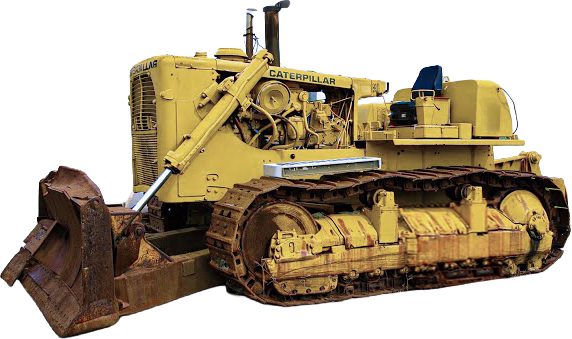
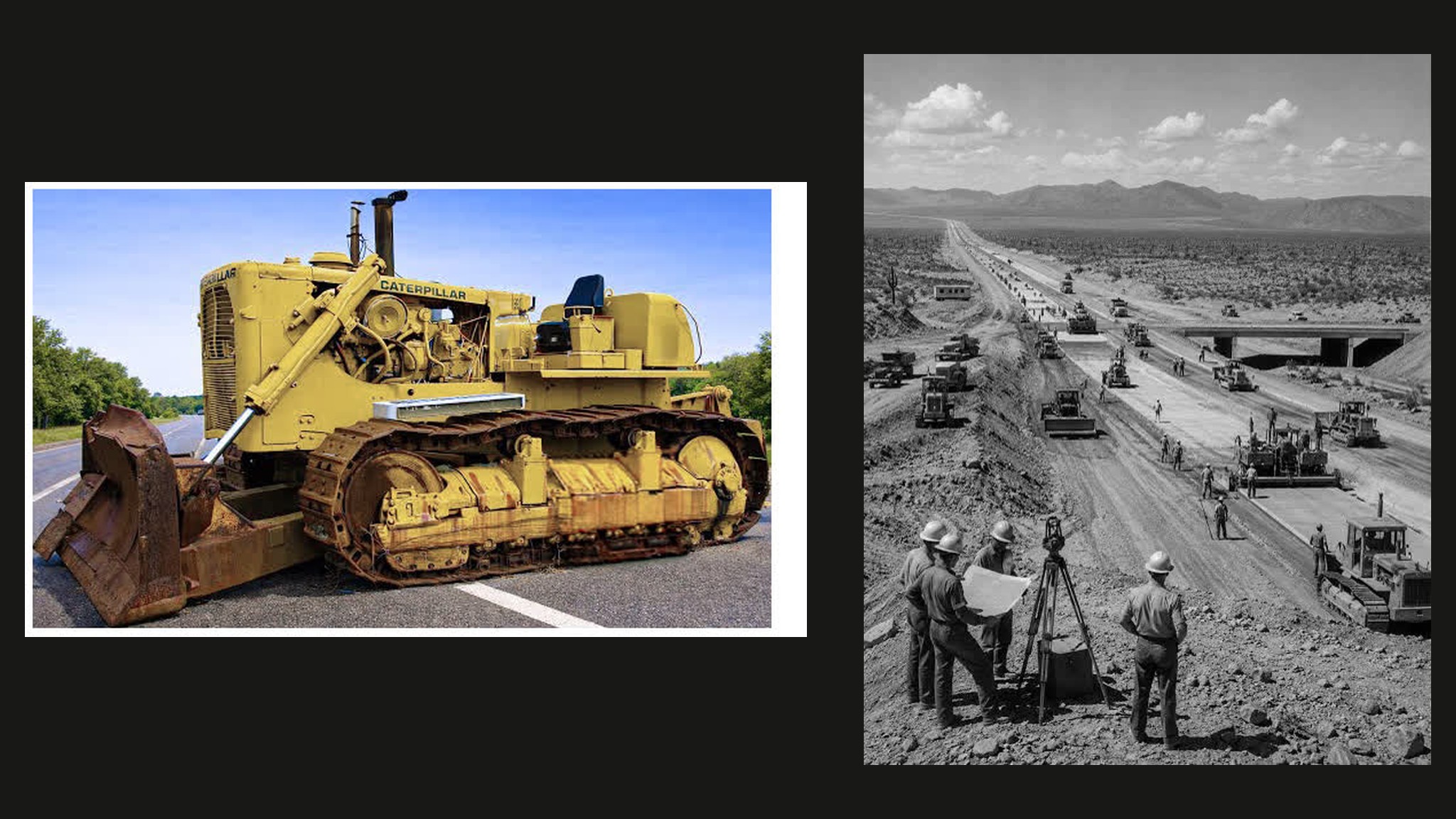
Edwards worked for years as a heavy-equipment operator and crew chief on California highway construction projects.
- 02 / 04 · THE ONE THAT MATCHED
The remains of Stella Darlene Nolan, killed in 1953, were recovered on an embankment tied to Santa Ana Freeway construction.
- 03 / 04 · THE EMPTY SEARCHES
In 1970 Edwards directed investigators to a site where he said he had left two children’s remains from 1956. None were found. Excavations near a 23 Freeway exit in Moorpark in October 2008 and beside the Winchester Canyon overpass in Goleta in June 2011 also found nothing.
- 04 / 04 · WHAT THAT MEANS
The empty searches don’t disprove Edwards’s claims, but they don’t confirm them either.
SIMONEAnd here's the detail that's going to sit under everything else we talk about tonight. Nolan's body was found off a bridge, right next to a Santa Ana Freeway construction site. An embankment that became part of the freeway.
ELIBecause Edwards' actual job, for over a decade, was running heavy equipment for the state highway system. The Division of Highways, what eventually becomes Caltrans.
SIMONEHe wasn't hiding a shovel in the trunk of his car. He had a government-issued reason to be standing on open dirt at construction sites all across Southern California for years.
The other names
Same caseUnproven is where I stop.
Where Edwards’s account could be checked against something physical, it held up. Where it couldn’t, three searches came back empty. A detailed, shifting body count from one source is not evidence on its own.
No body is not the same as no killing.
Edwards had years of unsupervised access to open construction ground, his one corroborated victim was found on that kind of site, and she sees no motive to pad the number after his sentence. She credits most of what he claimed.
Only three cases were ever charged. The Roger Madison details, the line about no one tearing up a freeway, and the eighteen-to-twenty total each rest on a single account with no primary document behind it.
ELIThen in 1970, once Edwards is already in custody for the other killings, he personally walks investigators out to a specific site and tells them, this is where I left them.
SIMONEWhich, procedurally, is worth pausing on. That's not a tip somebody phones in. That's the confessed killer walking law enforcement to a physical location. On his own initiative, describing exactly what they should find there.
ELIAnd they dig, and there's nothing there.
SIMONENothing.
ELIWhich is Edwards' own words coming back around, actually. Because he reportedly told a fellow inmate at San Quentin before he hanged himself in his cell in '71 that nobody would ever find his other victims. His reasoning, allegedly, no one would tear up a freeway.
SIMONEI want to sit with that for a second because that's not a documented statement. It's a secondhand account. One inmate remembering what another inmate said decades later. We should say that plainly.
From 1953 to the empty ground
1953 to 2011- Stella Darlene Nolan is killed. Her remains are later recovered on an embankment tied to Santa Ana Freeway construction. It is one of the three cases ever charged.
- Don Baker and Brenda Howell, Edwards’s sister-in-law, disappear near Morris Dam. In 1970 Edwards directs investigators to a site. Nothing is found.
- Ramona Price goes missing in Santa Barbara. Edwards had worked on a nearby overpass. No charge is ever brought.
- Gary Rochet and Donald Allen Todd are killed. These are the other two cases that lead to charges.
- The day after a botched attempt on three girls in Sylmar, all of whom survive, Edwards surrenders to LAPD with a loaded handgun.
- Edwards hangs himself in his cell at San Quentin after two earlier attempts.
- LAPD, Ventura County deputies and the FBI dig for about five days near a 23 Freeway exit in Moorpark, looking for Roger Dale Madison. They find nothing.
- Santa Barbara police search near the Winchester Canyon overpass in Goleta. Cadaver dogs alert, but nothing is found.
Two readings
No winner“I didn’t say lies. I said unproven.”
- “I can’t think of a reason he’d lie isn’t the same thing as proof he didn’t.”
- “I need the bodies, or the paperwork, or something besides a dying man’s word.”
- “3 charged cases, I’m certain about. Everything past that, I genuinely don’t know.”
“I don’t think absence of a body is absence of a killing.”
- “3 empty holes don’t mean 3 lies, though.”
- “I’m not asking you to take his word as evidence.”
- “Closed and resolved aren’t the same word.”
In their own words, from Episode 11.
No verdict.
ELINo. Three charged cases, I'm certain about. Everything past that, I genuinely don't know, and I'd rather say that plainly than pretend the confession settles it just because it's detailed.
SIMONEAnd I'd rather say plainly that I think he did more than three, and that the empty ground under two freeways and an overpass doesn't change my mind about that. Because I don't think absence of a body is absence of a killing. Not from a man who used his own government job to bury at least one child under a road.
- Is a detailed confession worth anything when three searches come back empty?
- What does a missing body prove, and what doesn’t it?
- Why did Edwards’s account hold up where it could be checked and fail where it couldn’t?
Hear the whole debate
A new case every Sunday
One short email when each new case file opens. Unsubscribe any time.