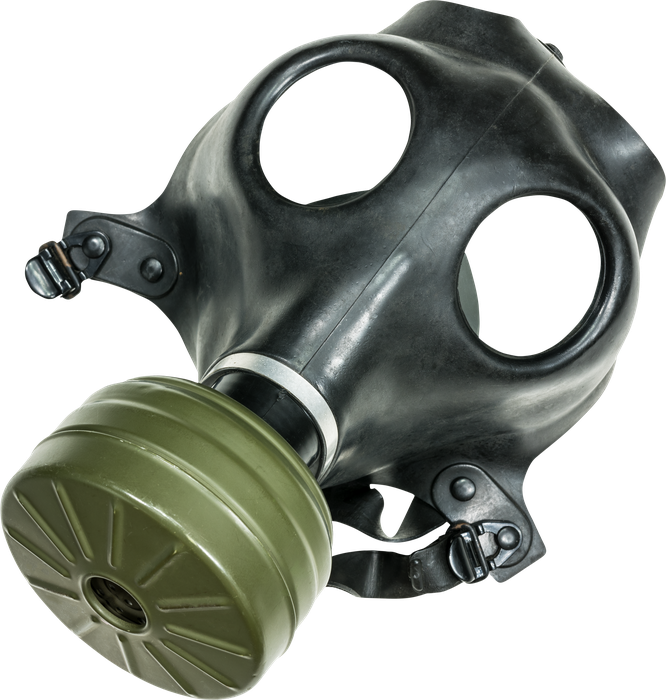
September 5, 1944 · Mattoon, Illinois
The Mad Gasser of Mattoon
In September 1944 a small Illinois town reported a mysterious gas attacker. Nobody was ever arrested. One porch left physical evidence behind. This is what Eli and Simone argued over.
ELIThat part, awful as it is, you could almost explain. Here's what's actually stopped researchers cold for 80 years. Right there on the same porch, next to that cloth, a skeleton key, a tube of lipstick, not hers.
SIMONEA house key and a lipstick tube next to a rag that just chemically burned a grown woman's mouth. Nobody has ever made those three objects add up into one coherent story.
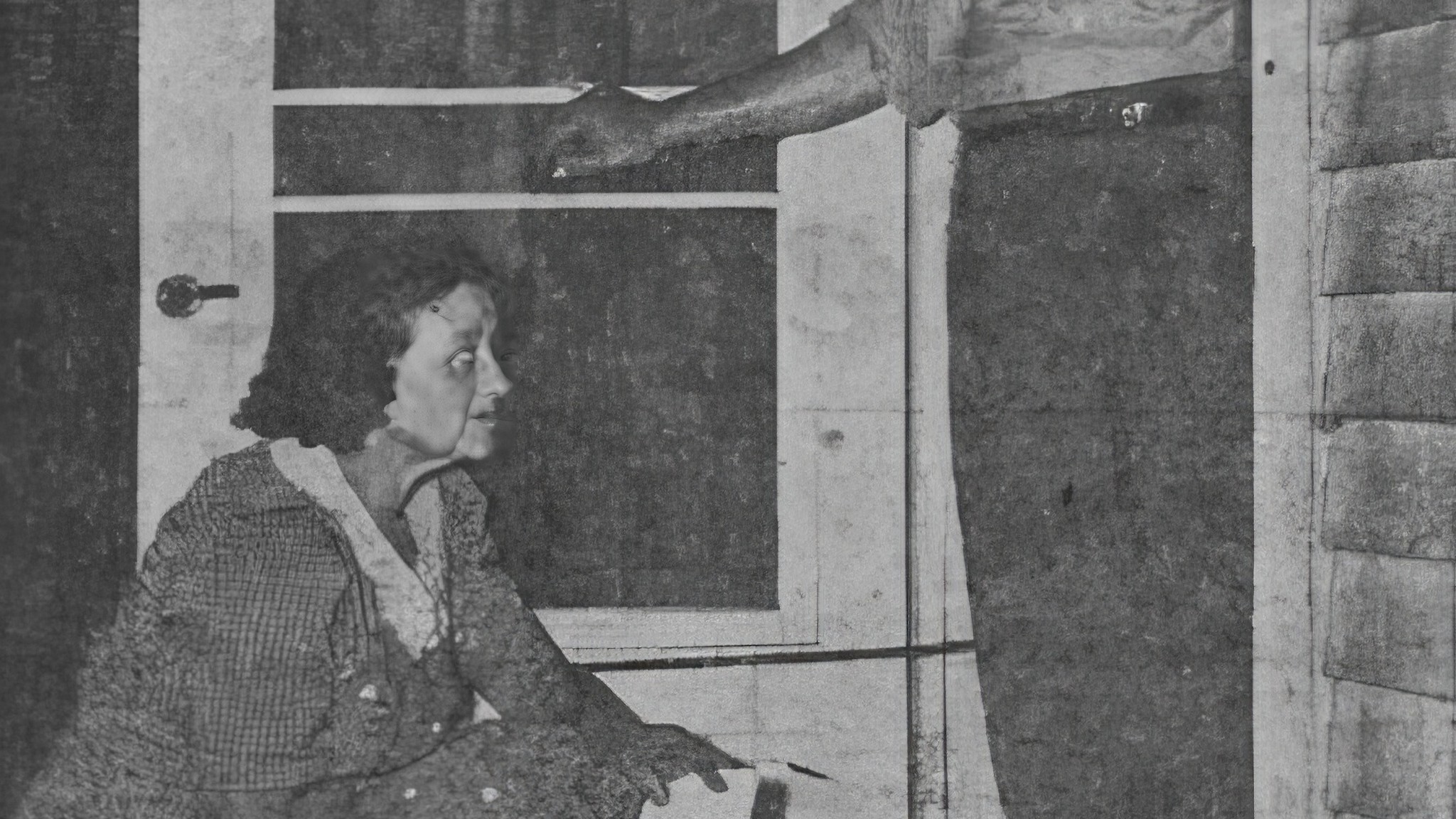
The porch
Beulah Cordes picked up a cloth on her porch, smelled it, and her lips swelled and her mouth and throat began to burn.
- The clothBalled up on the Cordes porch
- Also foundA skeleton key and a tube of lipstick, neither belonging to the household
- The linkNo connection between the three objects has ever been established
- Earliest reportThe Raef household, night of Aug. 31 to Sept. 1, not public until later
SIMONEBut here's the line the whole episode kind of pivots on. Right in the middle of the peak, the town's public health commissioner, a man named Thomas Wright, goes on the record with this: There is no doubt that a gas maniac exists and has made a number of attacks, but many of the reported attacks are nothing more than hysteria.
ELIRead that again. He's not picking a side.
SIMONEHe's naming both sides. In one sentence. In real time. In 1944.
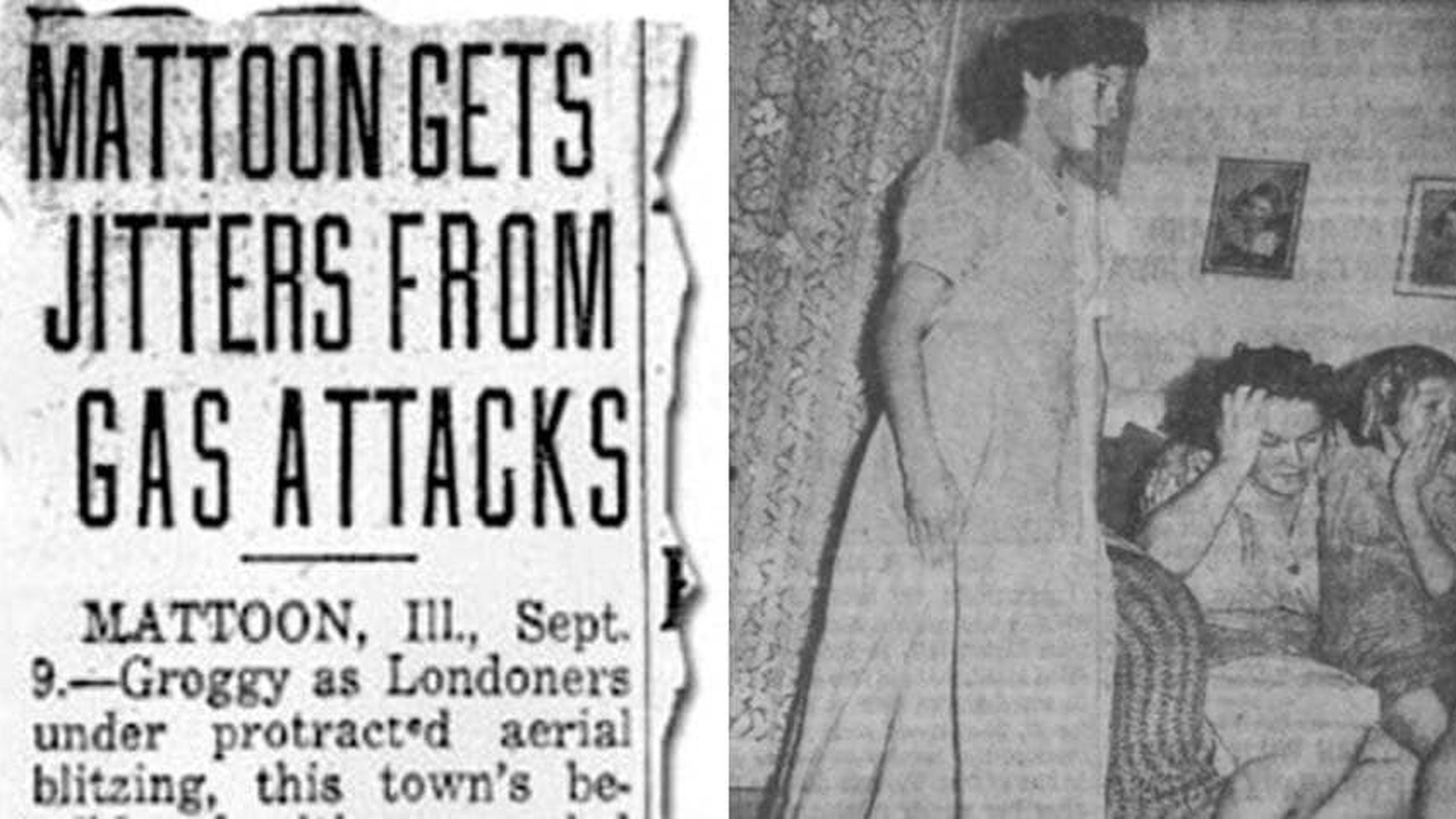
- 01 / 04 · KEARNEY
On Sept. 1, 1944, Aline Kearney reported a sweet odor in her bedroom and numb legs. Her husband Bert saw a man outside the window. The Journal Gazette ran it on page one.
- 02 / 04 · THE STUDY
Donald Johnson’s 1945 field study called that front page the “index” event and read the episode as mass hysteria.
- 03 / 04 · THE OFFICIAL
Public health commissioner Thomas Wright: “There is no doubt that a gas maniac exists… But many of the reported attacks are nothing more than hysteria.”
- 04 / 04 · THE CHIEF
On Sept. 12, Chief C. E. Cole floated an industrial source. The plant denied it, and reports fell sharply within days.
ELIReports climb in exact lockstep with the press coverage. They collapse within a day of the police chief publicly doubting it out loud. That correlation is hard to explain if you're picturing one person sneaking around Mattoon with a rag and a bottle for two straight weeks. It's very easy to explain if you're picturing a town primed by wartime anxiety, Husbands and sons gone. Real fear the war itself could reach American soil. A police department stretched about as thin as it's ever been, reading every strange smell in the dark as an attack because one front-page story told them that's what strange smells in the dark now meant.
A newspaper against a porch
Same townMass hysteria
Reports climbed with the press coverage and collapsed after the police chief publicly doubted them. Wartime fear was the fuel and the front page was the match.
Something happened on that porch
The media and a real physical incident can both be true. Hysteria explains the volume, but it has never explained the Cordes burns or the objects recovered.
The Farley Llewellyn theory, from a self-published 2003 book, is single-source. Wikipedia’s editors flag its sourcing as unreliable.
SIMONEPrimed people notice real things faster too, not just imagined ones. Which brings me to my actual problem with letting the newspaper carry the whole weight of this.
ELIGo ahead.
SIMONEBeulah Cordes is real. Her burns are real, documented. Not somebody's secondhand impression of a smell in the dark. And there's a cloth, a key, and a lipstick tube that were actually recovered. Not reported, recovered, sitting on a real porch.
ELII'm not going to fight you on that. Something happened at that house. I'll say that flatly. Whatever it was, That's not hysteria.
SIMONEThank you.
ELIDon't get comfortable. One corroborated, physically substantiated incident doesn't retroactively validate two weeks and dozens of secondhand, description-inconsistent reports that never produced one piece of forensic evidence, one suspect, or one charge.
Two weeks in September 1944
Aug. 31 to Sept. 18- The Raef household reports a sweet smell, nausea and partial paralysis. It does not become public until later.
- Aline Kearney’s report runs on the front page of the Mattoon Journal Gazette.
- Beulah Cordes finds the cloth, a key and a lipstick tube on her porch.
- Reports accelerate. Illinois State Police and FBI agents get involved.
- A report describes a short, heavyset suspect in women’s shoes. It was never corroborated.
- Chief Cole floats an industrial explanation. The plant denies it.
- Time magazine runs “The Mad Anesthetist” nationally.
- No suspect was ever arrested or charged. The case is unsolved.
Two readings
No winner“Hysteria is the best-evidenced read on the table.”
- “Reports climb in exact lockstep with the press coverage.”
- “A single, well-documented incident… doesn’t require an unidentified serial gasser to explain it.”
- “It’s a sample size of one.”
“Hysteria explains the volume. It’s never explained the residue.”
- “You don’t hallucinate a lipstick tube into existence.”
- “Media amplification and a real incident aren’t competing theories.”
- “I’m arguing the evidence, not the suspect.”
In their own words, from Episode 13.
No verdict.
ELIIt's also, on its own, a sample size of one, and it doesn't require an unidentified serial gasser to explain it. It could be an isolated, unrelated act that just happened to get swept up into two weeks of panic already in motion. The evidence for somebody was systematically gassing this town for two weeks is thin to nonexistent. The evidence for a newspaper story convinced an anxious wartime town it was under attack is about as strong as this kind of case ever gets.
- Was one real incident the spark for two weeks of panic?
- Did the front page create the attacker, or report one?
- Could a single unrelated act have been swept up into the panic?
Hear the whole debate
A new case every Sunday
One short email when each new case file opens. Unsubscribe any time.